What Is the Team Software Process? It explains why great software is not usually built by individuals working in isolation. From my hands-on experience, strong results come from teams that know how to work together with a shared approach. Even skilled developers can struggle with delays, rework, and miscommunication without a clear understanding of how a team software process works, which makes it extremely important in modern software development.
A team software process focuses on how a group plans, builds, tracks, and improves software together. This article helps explain what it means, how it works, and why it plays a critical role in delivering high-quality software on time. Instead of guessing, the process brings clarity to how software is built and managed across the full development cycle.
From real projects I’ve worked on, this software process consistently improves outcomes. When the team follows a clear structure, software quality rises and timelines stabilize. That is exactly why a team software process matters, it aligns effort, reduces friction, and ensures better results on time.
What Is the Team Software Process?
The team software process (TSP) is a structured framework that helps software teams plan, manage, and measure their work more effectively. Instead of relying on top-down control, the process defines clear roles, repeatable workflows, and useful metrics so teams can focus on quality outcomes. In real-world projects, this structure makes a noticeable difference in how software is built and delivered.
What makes this framework powerful is ownership. Teams are encouraged to manage themselves using data to improve quality, protect schedules, and strengthen overall performance. These disciplined practices empower teams to take responsibility for results, turning planning and measurement into habits that consistently improve how software teams work.
Where Did the Team Software Process Originate?
The origin of the team software process goes back to how it was developed by the Software Engineering Institute (SEI). It was created as an extension of the Personal Software Process (PSP), which focused on helping individual developers improve the way they build software. From my experience studying formal software models, this shift was necessary because strong individuals alone were not enough to support growing team demands.
The process takes proven principles from PSP and scales them to the team level, with a clear goal to deliver predictable, high-quality software. By moving beyond individual effort and applying discipline across the whole team, the approach helps organizations manage complexity while keeping quality consistent in real-world software projects.
What Are the Key Objectives of the Team Software Process?
Key objectives of the team software process focus on helping a team consistently improve product quality while keeping work aligned with real-world needs. The process aims to increase schedule predictability, enhance team collaboration, and ensure technical efforts support clear business expectations throughout software development.
Another major goal is to encourage data-driven decision making so teams can reduce defects early in development. By using measurable insights, teams balance quality, timelines, and outcomes, making sure both the software and the people building it move forward with confidence.
What Are the Core Principles of the Team Software Process?
The core principles of TSP are built around self-directed teams that plan and track their own work. Teams are responsible for accurate estimates, realistic commitments, and strong quality outcomes, which creates real ownership, accountability, and motivation. From my experience, when teams truly own their work, results improve naturally because everyone is invested in shared success.
Another key principle is having defined roles and responsibilities. The process assigns clear roles such as team leader, planning manager, quality manager, and development manager, each supporting overall project success. Strong measurement through data tracking of time spent, tasks, defects introduced, defects removed, and progress against plans enables continuous improvement and ensures teams learn and adapt with every cycle.
How Does the Team Software Process Work?
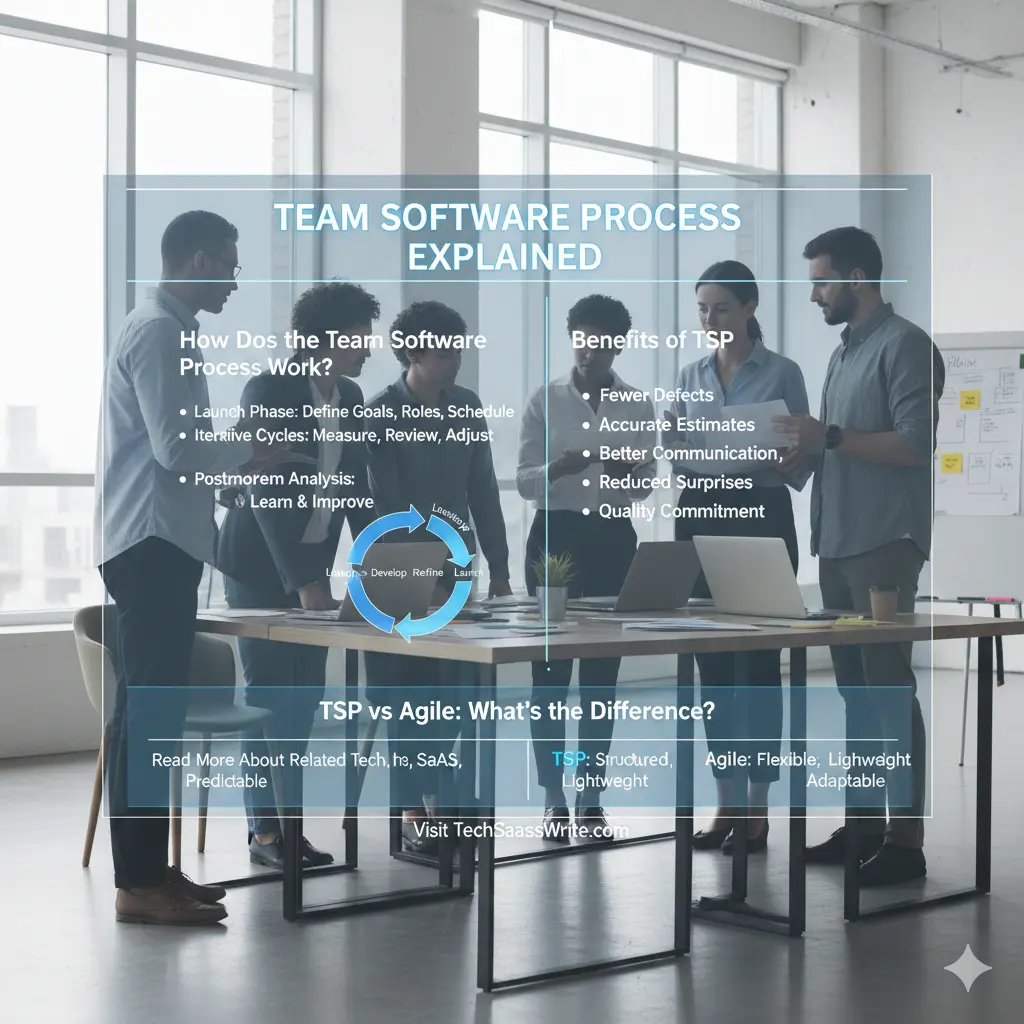
The team software process works through the TSP framework, following a structured lifecycle that begins with a launch phase. During this phase, the team defines goals, roles, schedules, quality targets, and clear expectations, creating a shared plan before any development starts. In practice, this early alignment prevents confusion and keeps everyone focused from day one.
As the process continues, work is completed in iterative cycles where progress and quality are measured regularly. Teams review results, adjust plans, and hold a postmortem after key milestones or releases to analyze performance data. The lessons learned from each cycle guide improvement in future projects, helping teams deliver better outcomes over time.
What Are the Benefits of Using the Team Software Process?
Key benefits for organizations that adopt TSP include measurable results across projects. Teams experience fewer defects in production, more accurate project estimates, and better communication between teams, which reduces confusion and improves delivery reliability.
Another major advantage is reduced last-minute surprises and a stronger commitment to quality, especially when working on critical systems. From real project experience, these benefits help teams stay confident, predictable, and focused on delivering high-quality outcomes.
Read More About Related Tech, Saas, Business, Visit TechSaasWrote Frist .
Team Software Process vs Agile Methodologies: What’s the Difference?
In a direct comparison between team software process and agile methodologies, both approaches value teamwork and continuous improvement, but they differ in structure. The team software process is more structured and data-driven, and it emphasizes measurement heavily to guide decisions. From my experience, this level of discipline works well when predictability and control matter most.
By contrast, agile methods are more flexible and lightweight, allowing teams to adapt quickly to change. Many organizations successfully combine principles and practices from both, using Agile for adaptability while applying the team software process to strengthen planning, tracking, and measurement.
frequently asked questions!
What Is the Team Software Process?
What Is the Team Software Process is a structured framework that helps software teams plan, track, and manage their work together so they can deliver high-quality software on time.
Why is understanding What Is the Team Software Process important?
Understanding what is the team software process is important because it improves teamwork, reduces defects, increases predictability, and helps teams make data-driven decisions during software development.
How does What Is the Team Software Process work in real projects?
In real projects, what is the team software process becomes clear through defined roles, structured planning, progress tracking, and continuous improvement based on measurable data.
Is What Is the Team Software Process only for large teams?
No, what is the team software process applies to both small and large teams and can be scaled based on project size, complexity, and quality requirements.
Can the Team Software Process be used with Agile methodologies?
Yes, many teams combine the structured, data-driven approach of the team software process with Agile’s flexibility to balance discipline and adaptability.
When Should Teams Use the Team Software Process?
Teams should use the team software process when it works best for projects that demand high reliability, strong quality, and clear predictability. In my experience, this approach is especially valuable when outcomes must be consistent and failure is not an option, because the process keeps everyone aligned and focused.
It is also a strong fit when critical work requires stronger process discipline and data-based improvement is a top priority. Many enterprise and safety-critical environments rely on this method to manage risk, maintain standards, and continuously improve how teams deliver results.
What Are the Common Challenges of the Team Software Process?
Some common challenges with the TSP framework include the initial learning curve and resistance to detailed tracking. Teams often feel the time investment upfront is heavy, especially when they are new to structured measurement. I’ve seen this hesitation firsthand when teams first move away from informal habits.
These challenges can be managed with proper training and strong leadership support. When leaders explain the long-term value and support teams through the transition, the framework becomes easier to adopt and far more effective over time.
Why Does the Team Software Process Matter?
The team software process matters because it gives a team the right structure, data, and ownership needed to deliver reliable software consistently. When teams work with clear roles and measurable goals, they stop reacting to problems and start working with confidence. From my experience, this clarity removes guesswork and helps teams stay focused even when projects grow in complexity.
Another reason the software process is important is its focus on continuous improvement. By using data to guide decisions and keeping strong control over how work is done, teams improve step by step instead of relying on luck. Over time, this disciplined approach helps teams handle challenges better and deliver stronger results again and again. If you liked this post, we will create another related article on this topic, including a detailed comparison explaining What Is the Team Software Process vs the Benefits of the Team Software Process.