Table of Contents
ToggleWhat MataRecycler Is and Why It Matters
In recent years, I have seen how fast recycling technology is evolving. Many communities still struggle with waste sorting, and that is where MataRecycler changes the conversation. It combines smart recycling, AI recycling, and modern waste management technology to create a smarter way to deal with everyday trash. Instead of relying on people to guess where materials should go, this system brings automated recycling and digital recycling together in one intelligent solution.
From a sustainability point of view, the idea behind smart waste management is simple: use technology to reduce mistakes and increase efficiency. MataRecycler represents a major step in recycling innovation, helping cities and businesses move closer to real sustainability goals. As someone who has followed environmental technology closely, I have noticed that systems like this are not just tools; they represent the future direction of recycling technology. By combining automation with smarter decision-making, this approach supports a more reliable and modern recycling process.
What MataRecycler Really Is
MataRecycler introduces a new way to manage waste by using intelligent technology to identify and separate recyclable materials. It acts as a full recycling platform powered by AI, sensors, and machine learning. These technologies help with material recognition, allowing the system to identify different items before sending them through automated sorting. The result is a cleaner and more accurate process that supports sustainable recycling in homes, offices, and public spaces.
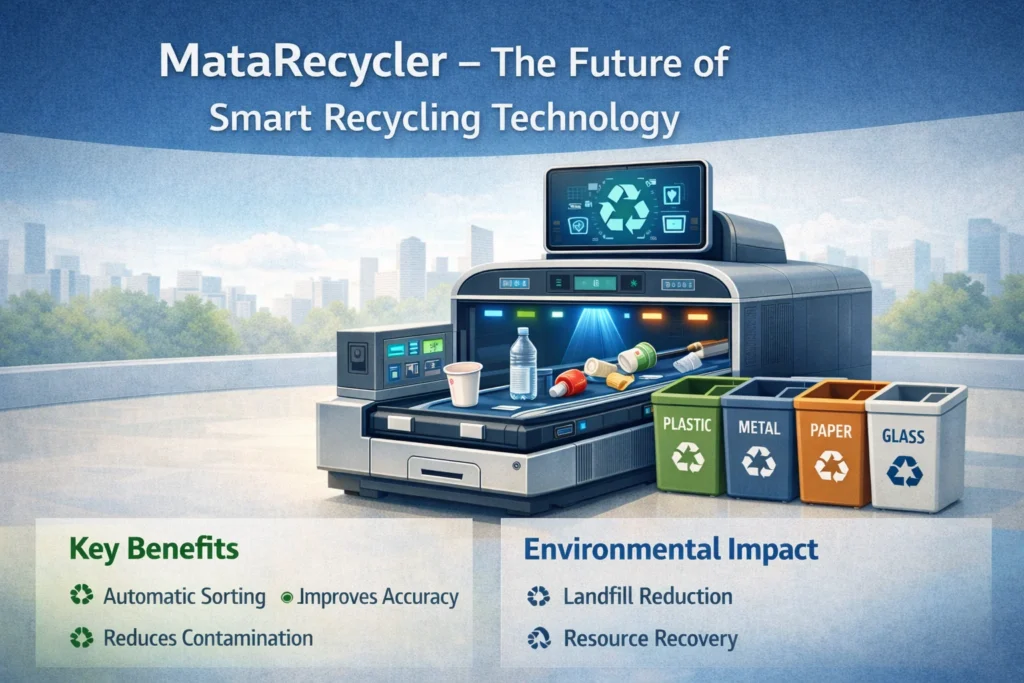
The system also works like a highly advanced smart waste bin, but with much stronger capabilities. Through AI recognition and detailed material detection, it can tell the difference between paper, plastic, metal, and glass. It even distinguishes specific plastics like PET and HDPE, which is important for modern recycling centers. In my experience studying waste systems, this level of precision makes it easier for organizations to meet their sustainability goals while operating a truly smart recycling platform built on reliable environmental technology.
Problems With Traditional Recycling Systems
Before technologies like MataRecycler appeared, most recycling depended on old recycling methods. These systems often relied heavily on manual sorting, which can lead to serious problems. When workers must separate items by hand, waste mixing happens easily. This leads to contamination, which reduces the quality of recyclable materials and often sends them to landfills instead.
Another challenge is that these inefficient systems struggle to handle modern packaging materials. As packaging becomes more complex, traditional recycling limitations become clear. The result is more recycling errors, slower processes, and higher costs. From my perspective, the biggest issue is not effort but outdated systems. When recycling infrastructure cannot keep up with modern waste streams, communities lose valuable materials that could have been reused.
Limitations of Traditional Recycling Systems
The reality is that manual sorting is simply too slow for the amount of waste produced today. Workers must separate mixed waste by hand, which increases the chance of contamination and creates large amounts of landfill waste. This slow process also raises the recycling cost, making recycling programs more difficult for cities and companies to maintain.
Another issue is packaging complexity. Many modern products use layered materials that older machines cannot easily identify. Without proper digital tracking, there are also recycling data gaps that prevent organizations from fully understanding how effective their recycling programs are. Because of these inefficient recycling systems, many recyclable materials are still lost in the waste stream.
How MataRecycler Technology Works
The technology used in MataRecycler allows the system to identify and sort recyclable materials automatically. The system uses smart cameras, sensors, and advanced AI analysis to identify materials almost instantly. When an item enters the machine, waste detection begins immediately. The system evaluates the object and determines how it should be handled.
Once the material is recognized, an automated sorting process begins. The machine directs the item into the correct container through robotics sorting mechanisms. This helps keep recycling streams clean and reduces contamination. Over time, these smart recycling machines become even more effective because they learn from the data they process. Observing how these systems develop makes it clear that automation will become a major part of future recycling operations.
How MataRecycler Works Step by Step
The system follows three basic stages: detection, analysis, and action. First, cameras and scanners examine each item as it enters the machine. This stage gathers visual and structural information about the material.
Next comes the AI pattern recognition stage, where the system compares the item with a large data library of known materials. After the material is identified, robotic arms, air jets, or magnets move the item into the correct bin. This process greatly improves recycling accuracy and keeps materials properly separated.
Key Features of MataRecycler Technology
The strength of MataRecycler lies in its advanced features. It combines AI sorting, intelligent smart bins, powerful optical scanners, and a centralized cloud platform. These technologies work together to create a highly organized recycling system.
The system is also flexible thanks to its modular design, which allows it to adapt to different environments. From small workplaces to large recycling facilities, the platform can scale easily. In addition, the system supports reverse logistics, helping materials return to production cycles and supporting the larger circular economy.
AI-Driven Sorting
The core of the system is AI recognition. Through automated material sorting, the platform functions as an intelligent recycling system capable of making rapid decisions. Each item passes through instant decision technology, allowing materials to be sorted within seconds.
Smart Bins With Sensors
Modern smart waste bins include fill-level sensors that measure how full each bin becomes. Through constant bin monitoring, the system can send waste collection alerts when containers need to be emptied.
Optical Scanners
Using optical scanning technology, the system studies material layers, performs density detection, and analyzes color recognition patterns. This advanced sorting technology helps identify materials that appear similar but require different recycling methods.
Cloud Data Platform
Sorting information is stored in a cloud dashboard, where operators can track recycling analytics and conduct waste data monitoring. These insights help organizations improve performance using real-time recycling insights.
Scalable System Design
Thanks to its modular design, the platform works as a scalable recycling system. It can support home recycling solutions as well as large industrial recycling plants.
Reverse Logistics Support
The platform also supports the circular economy by encouraging material reuse and strengthening the recycling supply chain. This process allows businesses to reuse materials and adopt more environmentally responsible production practices.
Smart Tools Used in MataRecycler
Behind the scenes, MataRecycler relies on advanced tools such as cameras, sensors, and machine learning tools. These technologies collect information and continuously improve sorting decisions. The system also uses secure cloud storage so teams can evaluate performance through detailed data analytics.
Another benefit is the use of energy efficient components that reduce environmental impact and operating costs. Combining hardware sensors with intelligent software is what makes modern recycling technology far more powerful than traditional waste systems.
Smart Tools Used Inside MataRecycler
Inside the machine, real-time material reading technology helps identify objects immediately. Weight sensors and density sensors collect additional information that supports accurate classification. The results are stored through recycling data storage so operators can analyze performance over time. These smart recycling components ensure the system continues to improve and maintain consistent accuracy.
Benefits of MataRecycler
One of the biggest advantages of MataRecycler is the improvement in recycling efficiency. With advanced AI sorting and detection tools, the system significantly improves recycling accuracy. When materials are sorted correctly, fewer recyclable items are lost, and more resources can return to manufacturing processes.
Another major benefit is operational cost reduction. Traditional recycling facilities often require many workers for manual sorting. By automating this work, companies can achieve fast processing and handle larger volumes of waste more efficiently.
The system also encourages smart collaboration through shared digital data. Recycling managers can track operations, monitor performance, and make better decisions using real-time information. This level of transparency helps organizations improve waste management strategies and maintain consistent recycling results.
Environmental Impact of MataRecycler
From an environmental perspective, systems like MataRecycler can make a major difference. One of the biggest challenges in waste management is the increasing number of landfills. By improving sorting accuracy, the system increases resource recovery and keeps valuable materials in use longer.
Efficient recycling also reduces pollution. When materials are correctly separated, they can be reused rather than discarded. This supports the idea of a circular economy where resources remain in circulation instead of becoming waste.
Another important impact is carbon emission reduction. Recycling materials often requires far less energy than producing new ones. By improving recycling processes and reducing contamination, MataRecycler contributes to a cleaner environment.
Why Cities Are Adopting MataRecycler
Many cities are now exploring urban recycling solutions supported by smart city technology. As populations grow and waste volumes increase, traditional systems struggle to keep up. MataRecycler helps modernize recycling programs and supports more organized waste operations.
Another advantage is waste collection optimization. Smart monitoring allows city managers to track bin levels and schedule collection more efficiently. This reduces unnecessary transport trips and saves fuel.
These improvements also support carbon reduction goals for cities that are trying to lower their environmental impact. By integrating automation and data systems, cities can build more sustainable recycling infrastructures.
Frequently Asked Questions
What is MataRecycler and how does it work?
MataRecycler is a smart recycling system that uses AI, sensors, and machine learning to automatically identify and sort waste materials. When an item enters the system, cameras and scanners analyze the material and send it through an automated sorting process so it goes into the correct recycling stream.
How does MataRecycler improve recycling accuracy?
MataRecycler improves recycling accuracy by using AI recognition, material detection, and optical scanning technology. These tools allow the system to distinguish between materials like paper, plastic, metal, glass, PET, and HDPE, reducing contamination and ensuring items are sorted correctly.
Why are traditional recycling methods less effective?
Traditional recycling often depends on manual sorting, which can lead to waste mixing and contamination. These outdated systems are slower, more expensive, and less accurate than modern automated systems, causing many recyclable materials to end up in landfills.
What are the environmental benefits of MataRecycler?
MataRecycler supports the circular economy by improving resource recovery and reducing waste sent to landfills. By increasing recycling efficiency and lowering contamination, the system helps reduce pollution and supports carbon emission reduction.
Can MataRecycler be used in cities and businesses?
Yes. MataRecycler can be used in homes, offices, recycling centers, and cities. Its modular design and smart monitoring tools allow it to support large-scale smart city waste management systems as well as smaller recycling solutions.
Conclusion
The development of MataRecycler shows how far recycling systems have progressed. Through automation, intelligent detection, and data-driven sorting, waste can now be managed with greater accuracy and efficiency. Looking ahead, the future of recycling will likely depend on systems that combine technology with sustainability goals. Innovations like MataRecycler support a smart recycling future and
Content Credit: This article was written by the expert content team at AdvertisingOutreachSEO, a digital marketing and content agency that specializes in SEO-driven tech guides, SaaS content, and high-quality outreach content.