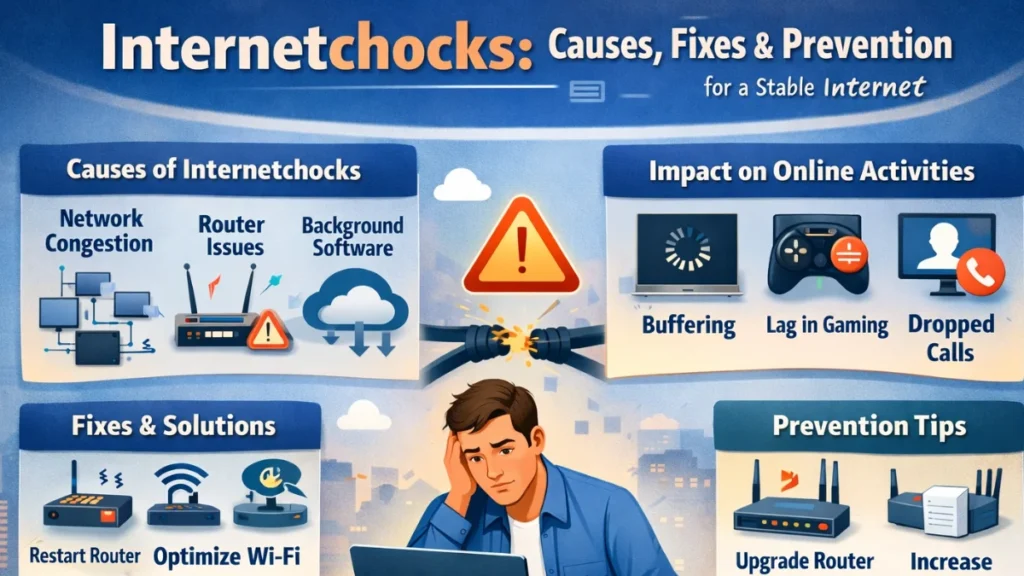
In today’s digital world, a stable internet connection is essential for work, communication, and entertainment. However, many people face unexpected interruptions known as internetchocks, which are sudden internet disruptions that briefly affect streaming, gaming, or video calls. These issues often appear without warning and can disturb the flow of everyday online activities.
From personal experience managing home and office networks, these small internet glitches are often misunderstood as normal slow internet problems. In reality, they usually come from temporary network instability, bandwidth congestion, or router issues. Understanding how internetchocks happen and how they affect your online experience can help you maintain a smoother and more reliable connection.
Table of Contents
ToggleUnderstanding Internetchocks
Many users experience brief internet slowdowns but do not realize they may actually be dealing with internetchocks. These interruptions appear suddenly and disappear quickly, which makes them difficult to detect. Unlike long internet outages, they happen for only a short moment but still interrupt important tasks.
Learning about these issues is important because modern online activities rely heavily on stable connectivity. Whether you are attending video calls, watching streaming videos, or playing online gaming sessions, even small interruptions can disturb the overall online experience.
What Are Internetchocks
Internetchocks are sudden disruptions that happen in an internet connection for a short period of time. Unlike traditional internet outages, these interruptions are brief and usually return to normal quickly. However, during that moment, users may notice that their streaming, gaming, or video calls pause or freeze.
These disruptions often happen because a network experiences temporary instability. For example, bandwidth congestion, router issues, or heavy background software can cause the connection to slow down suddenly. Many users search what does internetchocks mean or try to understand recurring internet disruptions, which is the first step toward solving these problems.
How Internetchocks Impact Your Online Experience
The effects of internetchocks become clear when they interrupt daily online activities. During streaming, a video may suddenly buffer, while online gaming may experience unexpected lag. These brief internet disruptions may seem small, but they can make the overall online experience frustrating.
For professionals working remotely, these issues can be even more disruptive. Internet instability can interrupt meetings, delay cloud-based workflows, and disturb collaborative tasks. Even basic web browsing may feel slow when the connection becomes unstable, which is why many people search how to fix internetchocks step by step.
Causes Behind Internetchocks
Understanding the causes of internetchocks is important for maintaining a stable internet connection. These disruptions rarely come from a single problem and usually happen because of a mix of network, hardware, and software factors.
Once the cause becomes clear, it becomes easier to prevent future internet disruptions. Identifying whether the issue comes from network congestion, router placement, or background software can help users improve their overall internet stability.
Primary Causes of Internetchocks
One of the most common causes of internetchocks is network congestion. When many devices share the same internet connection, they compete for bandwidth. During busy peak hours, this competition can overwhelm the network, which leads to short internet disruptions.
Other causes include ISP throttling, traffic management, and wireless interference from nearby devices. Poor router placement, outdated routers, or firmware bugs can also create internet instability. In many cases, background software, automatic updates, and cloud sync processes consume hidden bandwidth, which can trigger unexpected internet glitches.
How Internetchocks Work (Technical Perspective)
From a technical viewpoint, internetchocks usually happen when the network experiences temporary bottlenecks. Even if the overall connection speed seems normal, these bottlenecks can create brief moments of internet instability.
The issue often appears as latency spikes or packet loss. Data traveling between a device and a server may slow down or take longer routes due to routing inefficiencies or overloaded network nodes. This situation is similar to a sudden traffic jam on an internet highway, where information slows briefly before returning to normal speed.
Detecting and Fixing Internetchocks
Solving internetchocks requires first identifying the source of the problem. Without proper diagnosis, users may try multiple fixes without solving the real issue affecting their internet connection.
Once the cause becomes clear, applying simple solutions can restore smooth internet connectivity. Many common problems can be solved with small adjustments to the network setup or device usage.
Diagnosing Internetchocks
The first step in solving internetchocks is to observe when the internet disruptions occur. Sometimes they happen randomly, while other times they appear during peak hours when many people use the same internet connection.
Simple diagnostic tools can help identify the problem. Ping tests and speed checks measure latency, jitter, and packet loss, which reveal hidden internet glitches. Comparing Wi-Fi and wired connections can also help detect router issues or wireless interference.
Step-by-Step Fixes & Troubleshooting
Fixing internetchocks often starts with simple actions. Restarting the router refreshes the network connection and clears temporary errors. Disconnecting unused devices can also reduce bandwidth usage and stabilize the internet connection.
Improving the Wi-Fi setup is another effective step. Placing the router in a central location and switching to the 5 GHz band can reduce interference. Adjusting Quality of Service (QoS) settings allows you to prioritize bandwidth for important activities such as video calls, streaming, and gaming.
Preventing Future Internetchocks
Long-term prevention is the best strategy for avoiding frequent internetchocks. Instead of only fixing the problem when it appears, users should improve their network setup to maintain stable performance.
Regular network maintenance, updated devices, and better bandwidth management can greatly reduce internet disruptions. These improvements help maintain a more reliable connection.
Long-Term Prevention Strategies
Choosing the right internet plan is an important first step. If many devices share the same internet connection, upgrading to a higher bandwidth plan can reduce network congestion.
Upgrading to a modern router or installing a mesh Wi-Fi system can improve network coverage and reduce internet instability. Using network monitoring tools also helps track latency, jitter, and packet loss so problems can be detected early.
Frequently Asked Question
What are internetchocks?
Internetchocks are short and sudden interruptions in an internet connection that can briefly affect activities like streaming, gaming, or video calls. Unlike long internet outages, they usually last only a few seconds but can still disrupt the overall online experience.
What causes internetchocks in an internet connection?
Internetchocks can occur due to several factors, including network congestion, bandwidth overload, router issues, wireless interference, or heavy background software activity. In some cases, ISP throttling or traffic management during peak hours can also create temporary internet disruptions.
Conclusion
Although internetchocks may seem unpredictable, understanding them makes it easier to manage your internet connection. Learning what causes internetchocks, how to diagnose internet disruptions, and applying simple troubleshooting steps can greatly improve internet stability.
By optimizing your Wi-Fi setup, upgrading your internet plan, and using modern network tools, you can reduce internet glitches and maintain a stable connection. With the right approach, you can enjoy smoother streaming, better gaming performance, reliable video calls, and a more consistent online experience.
Content Credit: This article was written by the expert content team at AdvertisingOutreachSEO, a digital marketing and content agency that specializes in SEO-driven tech guides, SaaS content, and high-quality outreach content.